
Agricultural Storage Solutions: Grain, Equipment, and Livestock Shelters
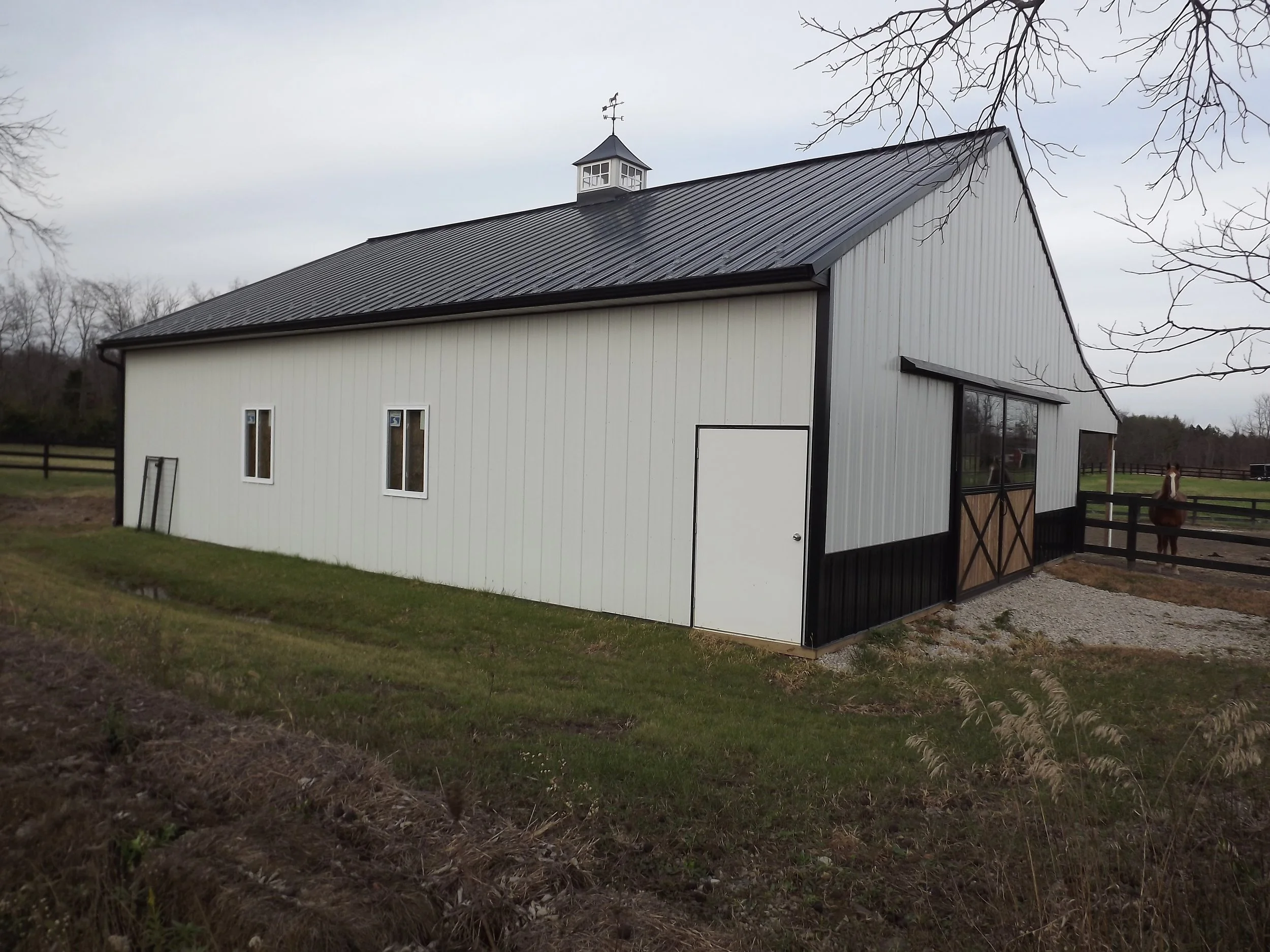
Agriculture is one of the most demanding industries on the planet — and the buildings that support it need to be just as hardworking as the people who farm the land. Whether you're storing grain through the winter, protecting hundreds of thousands of dollars' worth of equipment from the elements, or keeping livestock safe and comfortable through every season, the structures on your farm are not an afterthought. They're a core part of your operation.
At Kirkham Building System, Inc., we've spent years building pole buildings for agricultural operations of all sizes — from small hobby farms to large commercial operations. We understand that a barn isn't just a barn. It's a grain bin, an equipment depot, a livestock shelter, a working environment, and a financial investment all at once.
This guide breaks down the key considerations for each of the three major categories of agricultural storage — grain, equipment, and livestock — so you can make informed decisions about what your operation needs.
Grain Storage: Protecting Your Harvest Before It Leaves the Farm
For grain farmers, the harvest represents a year's worth of work — and what happens to that grain between the field and the market can have a significant impact on its value. Proper grain storage is not just about having a place to put the bushels. It's about maintaining quality, managing moisture, and giving yourself the flexibility to sell at the right time rather than at whatever price the market offers at harvest.
Why On-Farm Grain Storage Pays
Farmers with adequate on-farm storage have a significant advantage over those who must haul grain immediately at harvest. The ability to hold grain and sell it when prices improve — even modestly — can more than offset the cost of storage infrastructure over time. Beyond price flexibility, on-farm storage reduces dependence on commercial elevator capacity and elevator fees, which can add up meaningfully across a large operation.
What to Consider When Planning Grain Storage Space
Moisture management is everything. Grain stored at the wrong moisture level deteriorates rapidly, creating spoilage, mycotoxin issues, and significant financial loss. Any grain storage building needs to account for airflow and, in many cases, active aeration systems that allow you to manage grain temperature and moisture through the storage period.
Concrete floors are essential. Unlike other agricultural buildings where a gravel floor may be acceptable, grain storage facilities benefit enormously from a sealed concrete floor. Concrete prevents moisture wicking up from the ground, makes cleanup far easier between crops, and provides a stable surface for grain handling equipment.
Access matters as much as capacity. A grain storage building that's hard to load or unload efficiently creates bottlenecks at the worst possible time — during harvest, when every hour counts. Wide drive-through openings, adequate ceiling height for auger positioning, and a layout that allows loaded wagons or semi-trucks to maneuver easily should all be part of the design conversation.
Plan for your handling equipment. Consider where your augers, conveyors, or grain vacs will operate within and around the building. Proper placement of access doors, floor drains, and electrical service for handling equipment motors can make your storage system dramatically more efficient.
Pole Buildings for Grain Storage
A pole building configured for grain storage offers several advantages over traditional round bins or commercial elevator-style structures for many farm operations. The rectangular footprint is easier to load and unload with conventional equipment, allows for flexible internal layout including partial walls and aeration floor systems, and can be designed to handle the lateral pressures of grain loading when properly engineered for that purpose.
If bulk grain storage in a pole building is part of your plan, it's critical to discuss this with your builder upfront. Grain exerts significant lateral pressure on walls — proper engineering and framing for grain loads is not optional.
Equipment Storage: Protecting What Makes Your Farm Run
Modern farm equipment represents some of the largest capital investments a farming operation makes. A single combine, tractor, or planting system can represent hundreds of thousands of dollars — and that investment deserves to be protected.
The True Cost of Outdoor Equipment Storage
It's tempting to look at the cost of building an equipment storage facility and decide it's easier to leave machinery outside. But that math rarely holds up under scrutiny.
Equipment stored outdoors is subject to:
UV degradation — paint fading, rubber seal cracking, and plastic component brittleness from constant sun exposure
Moisture and rust — corrosion on metal components, hydraulic cylinder rods, and electrical connections accelerated by rain and dew cycles
Freeze-thaw damage — water that infiltrates into crevices, bearings, and hydraulic systems and then freezes causes damage that is often invisible until it becomes a catastrophic failure at the worst possible time
Rodent damage — mice nesting in equipment through the winter can destroy wiring harnesses, insulation, and interior components in a single season, often resulting in repair bills that far exceed what equipment storage would have cost
A well-built equipment storage building doesn't just protect your investment — it extends the useful life of your machinery, reduces maintenance costs, improves trade-in values, and keeps your equipment ready to run when you need it.
Sizing Your Equipment Storage Building
One of the most common mistakes farmers make when planning equipment storage is underestimating the space they actually need. Equipment looks different on the lot than it does in an enclosed space — and there's nothing more frustrating than a building that holds everything, but barely.
When sizing an equipment storage building, work from your actual equipment dimensions — not estimates. Measure every machine that will be stored, including implements with wings or headers attached. Then add:
A minimum of three to four feet on each side for walking clearance and minor service access
Additional clearance for any machine you may need to work on inside the building
Door openings that are at minimum one to two feet wider and taller than your largest piece of equipment
Extra bay space for equipment you plan to add in the next five to ten years
Eave height is a frequently underestimated dimension. Combines, grain carts, and large row crop equipment often require 16-foot or taller eave heights to enter comfortably — especially when equipment is loaded or when antennas and GPS equipment are mounted on top.
Features That Make Equipment Storage More Functional
Concrete floor throughout. Equipment stored on a concrete floor stays cleaner, drains easily after washing, and provides a stable surface for jacks, stands, and service equipment.
Generous electrical service. Battery maintainers, block heaters, power washers, lighting, air compressors, and welders all require electrical capacity. Plan your electrical service generously — it is far less expensive to add circuits during construction than to upgrade afterward.
Floor drains. If you wash equipment inside the building — and you should — floor drains make the process dramatically more practical. Locate them to accommodate the wash-down of your largest equipment.
Parts and supply storage area. A dedicated section of your equipment building for parts, fluids, filters, and shop supplies keeps everything organized and reduces the time spent hunting for what you need during the busy season.
Workbench and service area. Even a modest dedicated service area — a workbench, good lighting, an air line drop, and a few electrical outlets — can transform your equipment building into a functional shop that saves you countless service calls.
Livestock Shelters: Keeping Animals Safe, Comfortable, and Productive
Livestock shelter is one of the most nuanced categories in agricultural building design, because the needs vary dramatically depending on the species, the production system, and the climate. A beef cow-calf operation in northern Ohio has very different shelter requirements than a horse boarding facility, a hog finishing barn, or a small poultry flock. That said, several principles apply broadly across all livestock shelter design.
The Purpose of Livestock Shelter
Contrary to what some might assume, livestock shelter is not primarily about keeping animals warm — most healthy livestock are remarkably cold-tolerant when they are dry and protected from wind. The real purposes of shelter are:
Wind and precipitation protection — wet animals in wind lose body heat rapidly, increasing feed requirements and health risks
Shade and heat relief in summer — heat stress is a serious productivity and health concern for many species
Reduced mud and environmental stress — livestock standing in mud burn energy staying upright, are more prone to foot and leg problems, and are more difficult to manage
Easier animal handling — a well-designed shelter makes daily chores, veterinary work, and animal movement safer and more efficient for both animals and people
Feed and supply protection — keeping feed dry and accessible is as much a function of good shelter as protecting the animals themselves
Ventilation: The Most Critical Design Factor
For any enclosed livestock building, ventilation is the single most important design consideration — far more important than insulation or heating. Animals generate significant heat and moisture through respiration and body heat. Without adequate airflow, moisture accumulates, ammonia builds up from manure, and respiratory disease rates climb.
A well-designed livestock building uses natural ventilation — ridge vents combined with sidewall openings — to create a continuous flow of fresh air through the building without creating drafts at animal level. In colder climates, curtain sidewalls that can be adjusted seasonally give operators control over airflow while still providing protection from wind and precipitation.
Do not sacrifice ventilation to save building costs. It is one of the most expensive decisions you can make over the life of a livestock operation.
Species-Specific Considerations
Cattle — cow-calf and backgrounding operations: Beef cattle are extremely hardy and often do well in simple three-sided windbreak shelters or open-front pole buildings with deep bedded packs. The key requirements are wind protection, a dry resting area, and easy access for feeding equipment. Mature cows will typically not need supplemental heat even in cold climates if they are dry and out of the wind.
Horses: Horse facilities require more attention to detail than most livestock buildings because horses are more sensitive to air quality, bedding conditions, and environmental stress — and because horse owners typically have higher aesthetic expectations for their facilities. Stall size (minimum 12×12 for most horses), adequate aisle width, safety considerations for stall door hardware, tack and feed storage, and wash rack facilities all factor into a well-designed horse barn.
Hogs: Hog facilities are among the most specialized in agriculture and typically require climate control, manure management systems, and biosecurity design considerations that go well beyond standard pole building construction. If you are planning a commercial hog operation, work with a builder experienced in that specific type of facility.
Poultry: Small flock poultry housing is among the most straightforward livestock shelter applications. Key considerations include predator exclusion, ventilation, roost and nesting box design, and easy access for daily egg collection and periodic cleanout.
Sheep and goats: These small ruminants need dry, draft-free shelter but do not require significant heating. Adequate space per animal, good drainage in the bedding area, and secure perimeter fencing integrated with shelter design are the primary considerations.
Designing a Multi-Purpose Agricultural Building
Many farm operations benefit from combining multiple agricultural functions under one roof — or in one connected building complex. A common and practical combination is an equipment storage bay connected to a commodity or hay storage area, with a small shop and parts storage section attached to one end.
Designing these multi-purpose facilities requires thinking carefully about how each section interfaces with the others — door locations that allow equipment to access the storage areas, structural separation between grain and equipment areas, and workflow patterns that minimize wasted steps during daily operations.
At Kirkham Building System, Inc., this is exactly the kind of design conversation we welcome. There's no standard template for a farm building — there's only what works for your operation, your land, and your budget. We ask the right questions to make sure the building we design for you is one that works the way you actually farm.
Let's Build Something That Works as Hard as You Do
Your agricultural buildings should be tools that make your operation more efficient, protect your investments, and stand up to decades of hard use. At Kirkham Building System, Inc., we build pole buildings specifically designed for the demands of agricultural work — because we understand that what happens inside these buildings is how you make your living.
Contact us today to schedule your free consultation. Whether you're planning grain storage, equipment protection, livestock shelter, or all three — we're ready to help you figure out what's right for your farm.
Kirkham Building System, Inc. — Pole Building Specialists. Built Right. Built to Last.